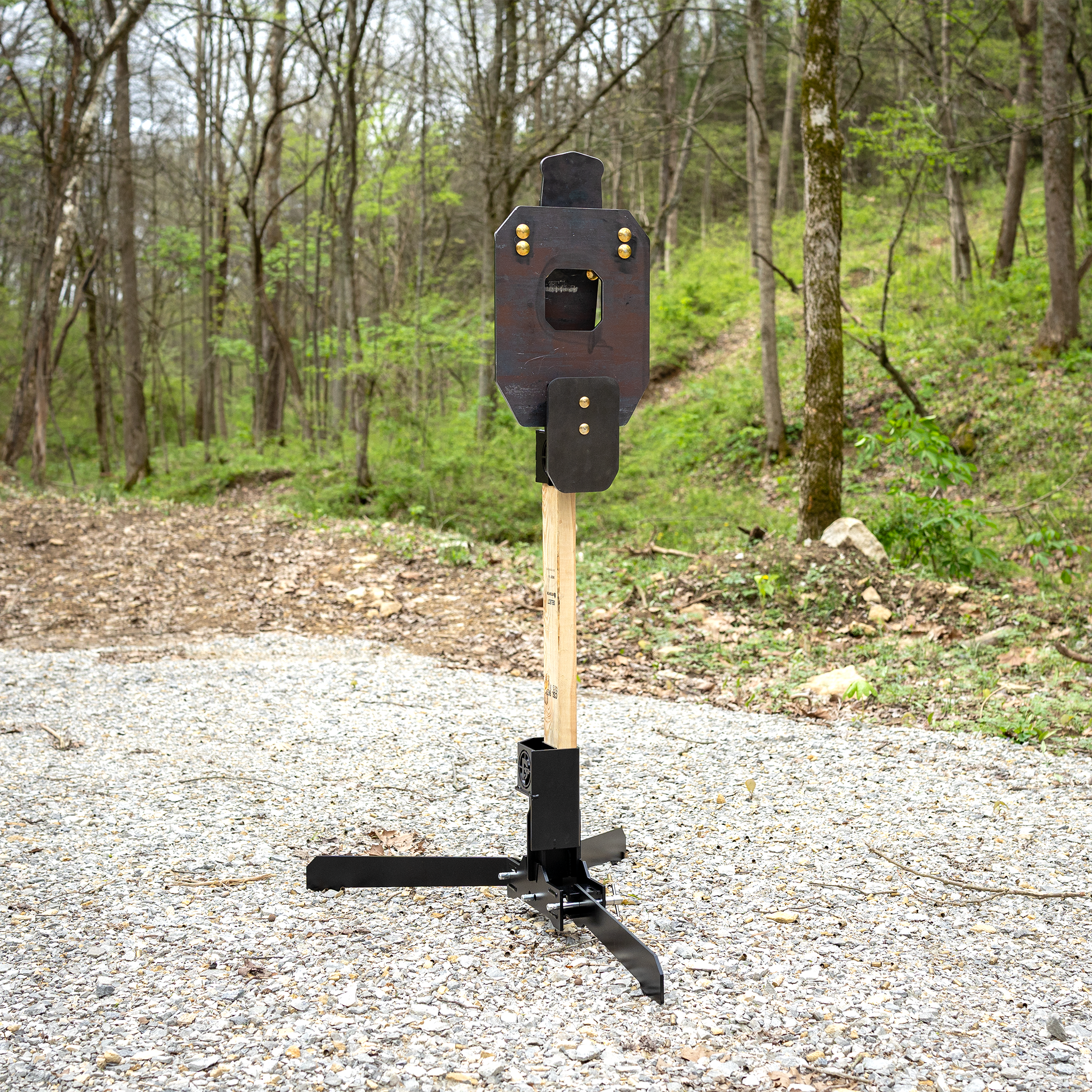
The Long-Range Mindset: Why Your Setup is Your Foundation
Long-range shooting strips away every shortcut. Unlike bench-rest shooting, where the environment is controlled and variables are minimized, field precision work demands that you manage your position, your equipment, and your surroundings simultaneously. One compromised variable leads to missed shots, bad data, and wasted time.
That's where a disciplined Long-Range Shooting Target Setup and Equipment Checklist becomes non-negotiable. It's not administrative overhead. It's the system that converts every shot into actionable data—information you can actually use to correct, confirm, or refine your firing solution.
This principle extends beyond the rifle itself. Every element of your setup either contributes to or corrupts the data your shots generate.
Field Note: Precision at distance rests on three pillars: Target Integrity (a consistent, reliable impact surface), Precision Support (stable platforms that eliminate shooter-induced error), and Environmental Awareness (reading and accounting for conditions before the first round leaves the barrel). Master these three, and every shot teaches you something valuable.
A repeatable checklist locks these pillars into place before you ever engage the trigger. The first place to start? Understanding the physics behind your target—which is exactly what the next section covers.
TL;DR for precision rifle range day checklist
A proper long-range shooting setup depends on three factors: target integrity, stable shooting support, and environmental awareness. Use AR500 steel targets matched to your caliber, maintain safe distances, and build a repeatable gear checklist to turn every shot into usable data.
The Physics of Steel: Selecting and Setting Up Your Targets
Steel targets are the gold standard for long-range work—instant audible feedback, durability, and no constant replacement. But steel isn't forgiving when you get the physics wrong. Building any serious best Long-Range Shooting Target Setup and Equipment Checklist has to start here: understanding what happens at the moment of impact.
Impact Velocity: The Number That Matters Most
Every steel target has a threshold. Bullet impact velocity must stay below ~2,850 fps at the target to prevent pitting and surface damage. Beyond that threshold, the bullet doesn't just splash—it gouges, degrading your target's integrity and shortening its lifespan significantly. Velocity at the muzzle is irrelevant here; it's the velocity at the target that counts. That distinction matters more as distances shrink.
Choosing the Right AR500 Thickness
AR500 steel isn't one-size-fits-all. Thickness selection depends directly on the caliber's energy at impact:
Ammo Caliber Chart for Steel Targets
Important Information
- Always wear hearing and eye protection when shooting
- Speed must be below 2850FPS (at target) to avoid pitting
- Max Bullet Energy at Target
- 1/4" AR500 - Below 700 ft lbs
- 3/8" AR500 - Below 2,100 ft lbs
- 1/2" AR500 - Below 4,000 ft lbs
- Targets need to be positioned at a 15 degree downward angle
- Do not use steel core or penetrating ammo. Ball or FMJ are suggested. Soft & Hollow Point may cause damage to targets
- Targets are designed for use with lead and copper jacketed lead core bullets only.
- *Do NOT Shoot Steel BB Shotgun Shells at Steel Targets*
| Caliber/Ammo Type | 1/4” AR500 Steel (Rimfire Only) | 3/8” AR500 Steel | 1/2” AR500 Steel | |
|---|---|---|---|---|
| Rifle | ||||
| .22 LR | 10+ Yards | 10+ Yards | 10+ Yards | |
| .17 HMR | 50+ Yards | 15+ Yards | 10+ Yards | |
| .22 Magnum | 25+ Yards | 15+ Yards | 10+ Yards | |
| .357 Magnum | Not Rated | 75+ Yards | 50+ Yards | |
| 223/5.56 Rem | Not Rated | 100+ Yards | 75+ Yards | |
| 7.62x39 | Not Rated | 100+ Yards | 100+ Yards | |
| 6.5 Creedmoor | Not Rated | 100+ Yards | 100+ Yards | |
| 308 Winchester | Not Rated | 100+ Yards | 100+ Yards | |
| 22-250 Rem | Not Rated | 200+ Yards | 150+ Yards | |
| 30-06 | Not Rated | 200+ Yards | 100+ Yards | |
| 243 Winchester | Not Rated | 250+ Yards | 200+ Yards | |
| 7MM | Not Rated | 300+ Yards | 200+ Yards | |
| 270 Winchester | Not Rated | 300+ Yards | 200+ Yards | |
| 300 Winchester Magnum | Not Rated | Not Rated | 200+ Yards | |
| .338 Lapua Magnum | Not Rated | Not Rated | 200+ Yards | |
| Pistol | ||||
| .22 LR | 10+ Yards | 10+ Yards | 10+ Yards | |
| .22 Magnum | 10+ Yards | 10+ Yards | 10+ Yards | |
| .380 ACP | 10+ Yards | 10+ Yards | 10+ Yards | |
| 9MM | 10+ Yards | 10+ Yards | 10+ Yards | |
| .40 S&W | 10+ Yards | 10+ Yards | 10+ Yards | |
| .45 ACP | 10+ Yards | 10+ Yards | 10+ Yards | |
| .44 Special | 10+ Yards | 10+ Yards | 10+ Yards | |
| .357 Magnum | Not Rated | 15+ Yards | 15+ Yards | |
| .44 Magnum | Not Rated | 15+ Yards | 15+ Yards | |
| 10 MM | Not Rated | 25+ Yards | 25+ Yards | |
| 500 S&W | Not Rated | Not Rated | 50+ Yards | |
| Shotgun* | ||||
| 410 Slug | Not Rated | 50+ Yards | 50+ Yards | |
| 20 G Slug | Not Rated | 50+ Yards | 50+ Yards | |
| 12 G Slug | Not Rated | 100+ Yards | 50+ Yards | |
| 410 Buck | Not Rated | 25+ Yards | 25+ Yards | |
| 20 G Buck | Not Rated | 25+ Yards | 25+ Yards | |
| 12 G Buck | Not Rated | 25+ Yards | 25+ Yards |
Standard 3/8" AR500 handles rifles up to .308 Winchester reliably, while magnum cartridges like .300 Win Mag demand 1/2" thickness to stay within the 4,000 ft-lbs energy ceiling that steel can safely absorb. Going undersized with a magnum round isn't just a gear mistake—it's a safety failure.
WARNING: Never engage steel targets with rifle calibers at distances under 100 yards. Magnum cartridges require 200–300+ yards of separation. Splash-back and jacket fragments travel farther and faster than most shooters anticipate.
Hanging Methods: Ring, Swing, and Energy Dissipation
How a target hangs determines how it survives. Fire hose straps or rubber strap kits are the preferred suspension method over rigid chains; they allow the target to swing freely on impact, dissipating kinetic energy rather than absorbing it through stress fractures. A freely swinging target also produces that satisfying, unmistakable ring that confirms a solid hit at distance.
With your steel dialed in for caliber, thickness, and placement, the next layer of long-range success comes down to what's in your range bag—and that's where a lot of shooters quietly lose time on the clock.
TL;DR for Steel Target Physics
Steel target safety depends on impact velocity, proper thickness, and correct mounting. Get any of these wrong, and you risk damaging targets or creating unsafe conditions.
The 'Never-Leave-Home-Without-It' Range Bag Checklist
With your steel dialed in and your target setup locked down, the next variable that separates productive range sessions from frustrating ones is what's in your bag. A complete Long-Range Shooting Target Setup and Equipment Checklist system isn't glamorous, but it's what keeps you shooting when something goes wrong at 800 yards.
Safety and Sight: Non-Negotiables
Start with the basics that never leave the bag:
-
Eye protection rated for high-velocity debris — ballistic-rated lenses, not generic sunglasses
-
Ear protection — quality electronic muffs that let you communicate while blocking impulse noise
-
Ballistic shield awareness — if you're running drills near a firing line, know your range's safety protocols
These aren't suggestions. They're the floor.
Tools That Actually Fix Problems
-
Multi-tool or torque wrench — this is the community consensus "one item" you can't leave behind. Scope rings shift, bipod mounts loosen, and nothing ends a session faster than a fastener problem you can't solve. A proper torque wrench prevents over-tightening that damages your scope mounts or scope mounts.
-
Bore snake — faster than a cleaning rod, packs flat, and clears fouling between strings of fire without a full teardown
-
Lens pen — smudged glass kills precision; a lens pen fixes it in seconds without scratching coatings
Quality-of-Life Items That Earn Their Weight
-
Kestrel weather meter — wind speed and atmospheric data directly inform your corrections at distance
-
Sunshade for your optic — glare washes out your reticle long before your eyes fatigue
-
Spare batteries — for rangefinders, Kestrels, and electronic muffs
The best range bag is the one that solves tomorrow's problem before it happens.
With your physical gear squared away, the next layer of precision comes from your support systems — the bipods, bags, ballistic software, and optics that translate good gear into consistent hits.
Precision Support Systems: Stability and Ballistic Tools
With your range bag dialed in and your consumables squared away, the next layer of precision comes from the systems that hold your rifle steady and tell you where to aim. These tools aren't luxuries—they're force multipliers.
Stability Platforms: Shooting Tripods and Bag Rests
Choosing the right support depends entirely on your shooting position and environment. A tripod shines when terrain won't accommodate prone shooting; elevated positions, dense brush, or barricade stages where height matters. A stable shooting bag rest is one of the most overlooked tools for improving shot consistency.


Ballistic Software and Calculators
Modern ballistic apps have made holdover guesswork obsolete. Input your muzzle velocity, bullet BC, environmental data, and the software generates firing solutions in seconds. Understanding the output matters as much as trusting it—shooters who know why the solution exists make better corrections downrange.
Optics and DOPE Cards
Glass quality is the bottleneck most shooters hit before anything else. A spotting scope that can't resolve the target clearly makes calling impacts impossible. Pair quality optics with a Data on Previous Engagements (DOPE) card—a laminated, rifle-specific reference documenting verified firing solutions at confirmed distances. Note that smaller, more detailed targets are advisable for precision practice, ensuring your DOPE reflects real-world accuracy demands. These cards rank among the essential items for shooting match preparation and field deployment alike.
When it's time to take everything organized and optimized into a competitive environment, structure becomes the priority—which is exactly what the next section addresses.
The Match-Ready Checklist: Organizing for Performance
With your stability systems and ballistic tools squared away, the final layer of competitive readiness comes down to organization. How you stage and access your gear under match pressure directly affects your performance. A well-organized shooter doesn't scramble — they execute.
Stage Management and Rapid Deployment
Treat your gear layout like a rifle setup: everything has a designated spot, and nothing is random. Before a match, pre-stage your equipment by firing order priority — items you'll need first should be immediately accessible. Use labeled pouches or color-coded bins to separate consumables, tools, and safety gear.
Precision is a system. Following a complete AR500 steel target setup guide before match day — confirming hang angle, chain condition, and safe distances — eliminates variables that could cost you points or create hazards during live fire.
Match-Day Essentials Checklist
☑ Shot timer — non-negotiable for stage accuracy
☑ Spare batteries — for timers, rangefinders, and illuminated optics
☑ Data book and pen — record your dope, don't trust memory under pressure
☑ Hearing and eye protection — doubles as safety compliance
☑ Basic rifle repair kit — firing pin, extractor, spare bolt, Allen keys
Emergency Preparedness
A more comprehensive kit should include emergency items to prevent minor issues from becoming major frustrations. Pack an IFAK (Individual First Aid Kit) with tourniquet, pressure bandage, and nitrile gloves. Treat it as mandatory, not optional.
With every component of your system now addressed — from steel to support tools to match-day readiness — it's time to pull the full picture together into a repeatable, reliable process.
Conclusion: The Systematic Path to the Bullseye
From your rifle setup and shooting gear to your ballistic tools, range bags, and target setup, every element either supports or undermines your accuracy. That's the core thesis, and it holds at every yard line.
Before your next long-distance session, do. a complete dry run of your precision rifle range day checklist. Lay everything out, verify your consumables, confirm your stability systems, and walk through each item before you ever load the truck. In practice, this single habit separates consistent performers from frustrated shooters.
A final safety note that can't be overstated: always verify bullet velocity at target remains below the steel's rated threshold — typically under 2,850 FPS for AR500 — and maintain manufacturer-recommended minimum distances.
Precision is a discipline; build the system, run the checklist, and let the fundamentals do the work.
FAQ
What is a Long-Range Shooting Setup?
A long-range shooting setup is the combination of targets, support systems, environmental tools, and gear used to ensure accurate and repeatable shots at extended distances.
What is AR500 Steel?
AR500 steel is a hardened steel designed to safely withstand bullet impacts when used at proper distances and velocities, making it the industry standard for shooting targets.
What distance is considered long-range shooting?
Long-range shooting typically starts at 300–500 yards and extends beyond 1,000 yards depending on the discipline.
Why is target angle important?
A downward angle helps deflect bullet fragments safely toward the ground, reducing ricochet risk.