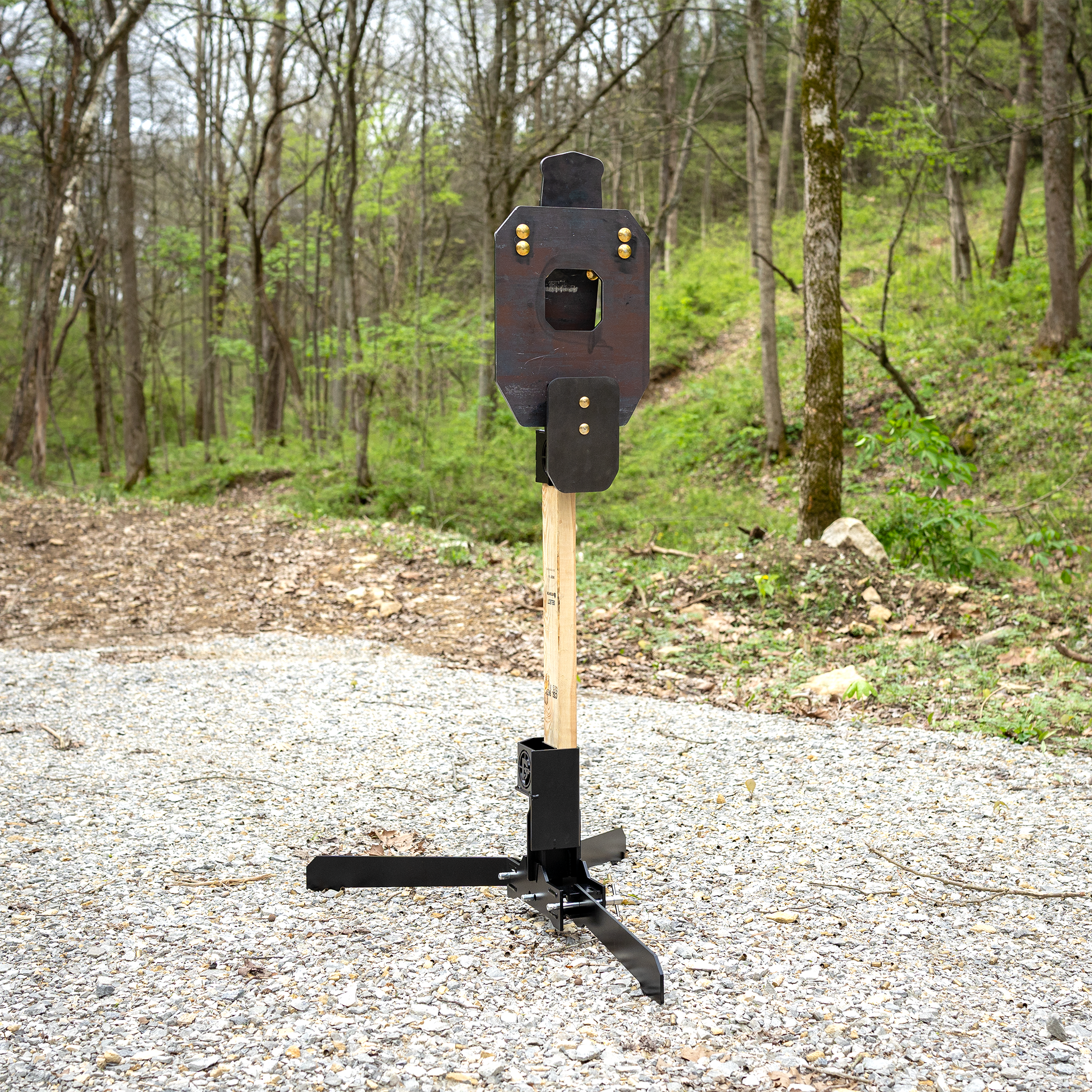
The Physics of Steel Target Safety
Steel targets are one of the most effective tools for training; but they can also be dangerous if set up incorrectly. One of the most important safety factors is angle.
The standard 10–20 degree steel target angle isn’t just a recommendation, it’s critical for controlling ricochet and directing bullet fragments safely into the ground. In this guide, we’ll explain why steel target angle matters and how to set it up correctly.
The most dangerous setup on any range is a steel target mounted flat — perfectly parallel to the ground, face-on to the shooter. In that configuration, energy from a bullet impact doesn't just dissipate into the target; it bounces directly back toward the firing line. Fragmented jacket material, lead particles, and steel debris travel on a return path that puts everyone downrange and behind the line at risk.
Think of it like a spray pattern: without an angle, fragments spread outward in all directions. With a downward angle, that entire pattern is redirected safely into the ground in front of the target.
The industry gold standard is a steel target angle of 10–20 degrees, tilting the face of the target downward toward the ground. This single variable — angle — is the primary control point for both shooter safety and long-term target integrity. roper angling is the foundational safety measure for any steel target system.
Angle isn't a preference — it's the primary variable separating a safe training evolution from a preventable injury. Understanding exactly why requires a closer look at what happens in the milliseconds after bullet meets steel, and where that debris actually goes.
TL;DR: Why Angle Steel Targets 10-20 Degrees
-
Always angle steel targets 10–20 degrees downward
-
15 degrees is the ideal balance for safety and visibility
-
Proper angle directs splatter safely into the ground
-
Flat targets increase ricochet and injury risk
-
Correct angling also extends the life of your steel targets
The 95% Splatter Zone: Understanding Deflection Physics
The moment a bullet meets a steel target, it doesn't simply "stop." At the millisecond of impact, the projectile fragments into dozens of high-velocity particles—a process distinct from a true ricochet, where a largely intact bullet deflects at a predictable angle. Fragmentation is actually the goal. The problem is where those fragments go next.
Splatter—the spray of lead and copper particles produced on impact—follows a consistent, predictable pattern. Think of it as a splatter zone approximately 20 degrees wide in every direction from that center point. That cone is always going somewhere—and a flat, vertical target means it fans out toward the sides, upward, and critically, back toward the shooter.
This is exactly why range safety experts consistently recommend angling steel targets 10-20 degrees forward and downward. That single adjustment redirects the entire 95% splatter cone toward the ground. Instead of debris traveling laterally or rearward at waist or chest height, it drives into the dirt a few feet in front of the target.
The difference between zero, 10, and 20 degrees is dramatic:
-
0 degrees (vertical): Debris fans unpredictably in all directions, including back toward the firing line.
-
10 degrees: Significantly reduces rearward splatter, though ground strike distance increases.
-
20 degrees: The cone drives steeply downward, keeping debris well clear of shooters.
A properly angled steel target doesn't eliminate splatter—it controls exactly where splatter lands.
Understanding this cone of debris also has direct implications for the target itself. How that energy distributes across the steel surface on impact affects not just shooter safety, but also long-term plate integrity.
Protecting the Plate: How Angling Extends AR500 Life
Getting the AR500 steel target angle right isn't just a safety measure — it's also the single most effective way to extend the working life of your steel. Even the toughest AR500 plate isn't immune to wear, and how you angle your target determines whether you're shooting for years or burning through steel in a season.
Perpendicular Hits and Pitting
When a bullet strikes a target dead-on at 90 degrees, all of its kinetic energy concentrates at a single point of impact. That focused force doesn't just fragment the projectile — it also hammers the steel surface directly, gouging out micro-craters with every shot. According to industry specifications, even 3/8" AR500 has a maximum energy threshold of around 2,100 ft-lbs at the target surface. Repeated perpendicular hits drive that energy straight into the same zones, accelerating pitting and pocking that degrades surface integrity fast.
Energy Dissipation Through Angle
Tipping a target forward changes the physics entirely. An angled surface forces the impact energy to spread across a larger contact area rather than concentrating at one spot. Think of it like the difference between pressing a nail straight into wood versus dragging it at a shallow angle — the distributed load does far less localized damage.
A properly angled target reduces mechanical stress on the steel fibers themselves, slowing the micro-fracturing that leads to pitting. Less pitting means the surface stays consistent, and a consistent surface is what produces reliable, predictable splatter patterns downward and away from the shooter.
Surface Integrity and Splatter Predictability
A pocked, uneven target face deflects fragments unpredictably. Cratered steel creates irregular rebound angles that no stance or distance can fully compensate for. Maintaining surface integrity through correct angling keeps splatter behavior consistent; which is exactly why finding the right angle matters beyond just steel longevity.
The 'Sweet Spot': Why 15 Degrees is the Competitive Standard
Understanding the physics of splatter and target wear naturally leads to the next question: what's the best angle for steel target shooting in a real competitive environment? The answer that's emerged from decades of organized competition is remarkably consistent; 15 degrees.
That number isn't arbitrary. It represents a carefully balanced compromise between two competing priorities:
-
Shooter visibility: A target angled too steeply starts to lose its clean face-on profile, making accurate shot calls harder at speed.
-
Fragment deflection: The angle must still redirect splatter reliably downward and away from the firing line.
At 15 degrees, both priorities are satisfied without sacrificing either.
The Risk of Going Too Far
Exceeding 20 degrees introduces a different problem — bullet "skipping." When the face angle becomes too aggressive, projectiles can deflect at unpredictable lateral angles rather than driving fragments straight down. Additionally, a steeply tilted plate presents a distorted target profile, complicating scoring and disrupting shooter rhythm in timed events.
Consistency is the ultimate goal in competitive shooting, and that extends to your equipment setup. Getting the angle dialed in correctly every time is what separates a well-run match from a hazardous one — which is exactly why mounting mechanics matter so much.
How to Achieve the Perfect Angle: Mounting Mechanics
Knowing the ideal steel target splatter deflection angle is one thing — actually achieving and maintaining it in the field is another. The good news is that you've got several reliable mounting methods to choose from, each with its own trade-offs. Here's a breakdown of the most common approaches.
Strap Mounting: Simple and Self-Correcting
Chain or strap mounting is the most widely used method for a reason. By using longer straps or chain links at the rear attachment point than at the front, you create a natural gravity-driven tilt that holds the target at roughly 15–20 degrees. It's low-cost, easy to set up, and self-correcting — the target swings back into position after each hit. The main caveat is that chain length needs to be measured and matched deliberately. Eyeballing it can leave you under- or over-angled without realizing it.
Bracket Systems: Precision at a Price
Fixed-angle spring brackets lock your target at a specific tilt and are popular in competitive shooting setups where consistency matters. The advantage is repeatability — every stage is set to the exact same angle. However, rigid brackets absorb more impact stress than chain, which can shorten hardware life over high-volume shooting sessions. They're also more expensive to replace if a bracket bends or cracks.

The 'Lean' Method: T-Posts and Specialized Hangers
Using T-posts with dedicated angled hangers is a practical approach for shooters setting up on uneven ground or temporary ranges. The hanger holds the target at a pre-set angle relative to the post, and the setup breaks down quickly for transport. The limitation here is that ground angle affects your final tilt — always account for slope.
Verifying Your Angle Before the First Shot
Never assume the angle is correct — always confirm it. A simple phone-based level app works well for a quick check. Hold it flush against the target face and verify you're in that 15–20 degree window. A bevel gauge is even more precise for permanent installations.
Getting the mounting mechanics right is just one piece of the safety puzzle, though. Even a perfectly angled target can't compensate for the wrong ammo, inadequate PPE, or shooting at distances that are too close. Check out our Ammo Caliber Chart for more information.
The Safety Checklist: Beyond the Angle
The perfect 15-degree tilt means nothing if the rest of your setup is wrong. Angle is one critical variable — but safe steel target shooting demands a complete checklist, not a single fix.
Minimum Safe Distances
Distance is your first line of defense against splatter. For handguns engaging AR500 steel, the minimum safe distance is generally 10 yards, though many range safety officers push that to 15 yards for added margin. Rifles are a different story entirely — standard guidance calls for a minimum of 100 yards when engaging rifle-rated steel targets. Compressing that distance increases both splatter energy and the risk of target pitting, which compounds danger over time.
Eye and Hearing Protection Is Non-Negotiable
Wrap-around eye protection and proper hearing protection aren’t optional — they’re essential. Steel targets create unpredictable fragment patterns, and even small particles can cause serious injury if they reach the eyes. Standard shooting glasses leave gaps at the temples where splatter can enter at oblique angles, while wrap-around designs seal those exposure points and provide more complete coverage.
Hearing protection is just as critical. The sharp, concussive report of gunfire — especially when shooting steel — can cause permanent hearing damage over time. Whether you’re using earmuffs, earplugs, or electronic hearing protection, consistent use is key to protecting your long-term hearing health.
The physics of deflected fragments and sound pressure don’t leave room for shortcuts — proper PPE is your last line of defense.
The 'Soft Steel' Problem
Angle cannot compensate for inadequate plate quality. Mild steel or undersized plates — anything outside AR500 or AR550 specifications — deform under repeated fire, creating unpredictable surface geometry that defeats even a properly set deflection angle. According to Double Tap Industries' ammo caliber chart, ¼" AR500 steel has a maximum bullet energy rating of just 700 ft-lbs at the target. Exceeding those thresholds on substandard steel creates craters that redirect splatter forward rather than downward.
Ammo Restrictions
Armor-piercing and steel-core rounds are strictly prohibited on any steel target setup. These projectiles don't fragment predictably — they penetrate or shatter the plate entirely, creating catastrophic hazard scenarios no angle adjustment can address.
A properly angled, correctly rated steel target with appropriate PPE and distance protocols is the complete safety package. Every element works together. Remove one, and you've reintroduced the risk the other components were designed to eliminate.
Key Steel Target Angle 10-20 Degrees Takeaways
-
0° (flat): unsafe, unpredictable splatter
-
10°: improves safety, but less aggressive deflection
-
15°: ideal balance for competition and training
-
20°: maximum downward deflection
-
Always verify angle before shooting
-
Always verify caliber and target before shooting