The 2026 Competitive Landscape: Why Your Steel Matters More Than Ever
Choosing the best steel targets for competitive shooting in 2026 isn’t just a gear decision — it’s a performance decision.
Competitive shooting continues to grow across disciplines like USPSA, IDPA and 3-Gun, with more shooters, faster stages, and increasingly technical course design. Today’s matches demand speed, precision, and confidence under pressure — and your training setup needs to reflect that.
Paper targets can’t fully prepare you for real match conditions. They’re silent, offering no immediate feedback when every fraction of a second matters. Steel targets change that. The instant “ping” confirms your hit in real time, allowing for faster transitions and more confident follow-through.
Modern stage design often includes multi-target arrays at varying distances, where reactive steel becomes essential for building speed, accuracy, and adaptability. At the same time, evolving safety standards continue to emphasize proper target construction and mounting — making quality more important than ever.
Steel doesn’t lie — and it doesn’t forgive poor equipment choices.
That’s why experienced shooters follow the “Buy Once, Cry Once” mindset. The right steel target isn’t just durable — it’s a long-term investment in safer, more effective training. Understanding what sets materials like AR500 and AR550 apart is where that decision begins.
AR500 vs. AR550 vs. SR500+: The Science of Hardness
What Is BHN and Why Should You Care?
Brinell Hardness Number (BHN) measures a material's resistance to deformation under pressure. For rifle shooters, it's the single most important spec on a target's data sheet. Standard mild steel sits around 120–180 BHN. AR500 — the baseline standard for most top AR500 steel targets USPSA competitions use — clocks in at 477–534 BHN. That hardness is what deflects bullet energy downward rather than absorbing it into the plate.
The higher the BHN, the longer the target holds its shape under repeated fire. Simple as that.
AR500 Steel Targets for Competitive Shooting
AR500 steel remains the most widely available option, and for handgun-caliber shooting, it's genuinely solid. However, for rifle-caliber rounds — especially at closer distances — AR500 is better understood as the minimum acceptable standard. Sustained rifle fire at 2,850 FPS or below can still generate cumulative surface wear that degrades the target face over time.
AR550, with a BHN typically pushing past 550, closes that gap meaningfully. In practice, AR550 targets resist pitting longer, maintain a flatter surface, and hold up under the kind of high-volume, high-speed training that competitive shooters demand heading into 2026.
SR500+: The Emerging Standard
SR500+ represents the next evolution — proprietary alloy formulations from specialty manufacturers engineered specifically for durability under sustained rifle fire. High-volume hunters and 3-gun competitors are driving demand for these materials, and the results show in extended target lifespan.
The Real Danger: Pitting and Splashback
Here's where hardness becomes a safety issue, not just a performance one. Pitting and cratering on a degraded target surface change the geometry of bullet fragmentation. Instead of deflecting downward at a consistent angle, fragments scatter unpredictably — creating genuine splashback risk for shooters and bystanders.
A pitted target isn't just worn out. It's a hazard.
With the material science established, the next step is matching the right steel to specific competitive formats — starting with USPSA and IPSC, where plate choice can directly shape how you train.
Safety Standards: Navigating the 2026 IDPA Rulebook
Knowing which steel to buy is only half the equation. Knowing how to use it without sending a fragment through your shooting buddy's leg is the other half — and the rulebook isn't forgiving on this point.
The 10-Yard Minimum Engagement Rule
The 2026 IDPA rulebook reinforces what physics already dictates: no engagement under 10 yards for steel targets in sanctioned matches. This isn't arbitrary bureaucracy. At close range, splashback velocity increases dramatically, and even properly hardened AR500 steel can return fragments with enough energy to cause serious injury. Match directors running the best steel gong targets at 3-gun matches in 2026 need to post clear minimum distance markers — no exceptions. Review our Ammo Caliber Chart for a deeper dive into safe minimum distances.
Angle Matters More Than Steel Grade
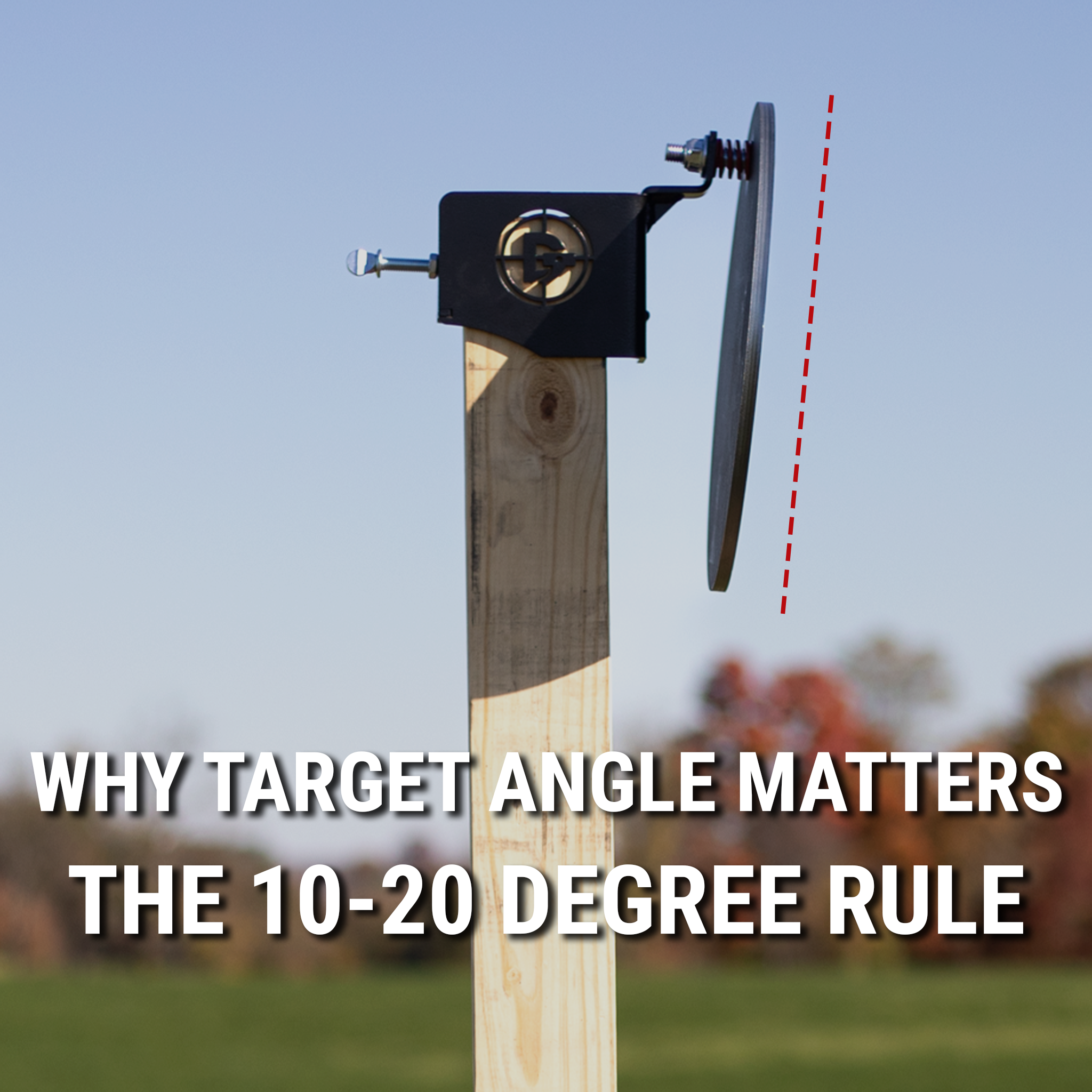
Angled targets are non-negotiable. A flat-hanging steel plate sends splashback directly back toward the shooter. Standard practice calls for a 10 to 20-degree forward cant, which deflects fragmentation downward into the berm. Without proper angle, even premium AR500 becomes a hazard. Check out our blog “Why Target Angle Matters” for more information.
Inspecting for Dimples: The Hidden Danger
Steel that looks fine can still be compromised. Dimpling — small cratered depressions on the target face — signals that the hardness has been locally defeated. Pitted or dimpled targets should be pulled from service immediately, as subsequent rounds can unpredictably fragment or ricochet at dangerous angles.
Top 5 Steel Target Systems for 2026
Everything covered in this article — steel grades, reactive geometry, safety margins, and 3-gun demands — comes down to one practical question: which system do you actually buy? Here are the top five picks for 2026.
Steel Silhouette Targets (IPSC/IDPA Style)
Steel silhouettes are a staple for competitive shooters training for USPSA, IPSC, and IDPA-style matches.
Why they’re great:
-
Mimic real competition target shapes
-
Reinforce center-mass accuracy and shot placement
-
Provide instant auditory feedback (“ping”) for hits
Best for:
-
Practicing transitions between targets
-
Building speed with controlled accuracy
-
Running realistic stage simulations
Steel Gong Targets
Steel gongs are one of the most versatile training tools for shooters at any level, making them excellent 3-gun match training options in 2026.
Why they’re great:
-
Circular shape forces precision
-
Great for both close-range speed work and long-range accuracy
-
Highly visible and satisfying hit feedback
Best for:
-
Target acquisition drills
-
Distance shooting and consistency
-
Warm-ups and skill-building sessions
Reactive Steel Targets for 3-Gun
Reactive targets (like swinging or moving steel) add an extra layer of challenge to your training.
Why they’re great:
-
Movement forces quicker follow-up shots
-
Improves reaction time and adaptability
-
Simulates dynamic match conditions
Best for:
-
Speed drills under pressure
-
Improving tracking and timing
-
Breaking static shooting habits

2x4 Target Systems
Double Tap’s modular 2x4 systems are built for flexibility and easy setup.
Why they’re great:
-
Lightweight and portable
-
Quick to assemble and reconfigure
-
Allows multiple target arrangements
Best for:
-
Building custom stages
-
Practicing transitions and movement
-
Shooters who train in multiple locations
AR500 / AR550 Steel Targets
Material matters—a lot.
Why they’re great:
-
AR500 and AR550 steel are designed to withstand repeated impacts
-
Maintain surface integrity for safer shooting
-
Provide consistent, reliable feedback over time
Best for:
-
High-volume training
-
Maintaining safety standards
-
Long-term durability and performance
Why Double Tap Targets Stand Out
Competitive shooters need gear they can trust. Double Tap targets are:
-
Made in the USA
-
Precision CNC cut for consistency
-
Built for safe deflection and longevity
That means you can focus on your training—not worrying about your equipment.
TL;DR for Best Steel Targets Competitive Shooting 2026
The best targets for competitive shooting practice combine:
-
Realistic shapes (silhouettes)
-
Precision challenges (gongs)
-
Dynamic movement (reactive targets)
-
Flexible setups (2x4 systems)
Using a mix of these allows you to train smarter, faster, and more effectively.
Key Takeaways: Choosing the Best Steel Targets for Competitive Shooting
When it comes to competitive shooting, your targets matter just as much as your technique. The right setup helps you train smarter, move faster, and shoot more confidently under pressure.
-
Steel doesn’t lie — it gives instant, honest feedback on every shot. That’s what makes it one of the most effective training tools available.
-
Stability matters more than you think, especially for handgun calibers. A solid, well-mounted target system will improve consistency and safety far more than simply increasing plate thickness.
-
Reactive steel targets add a competitive edge by forcing you to adapt, track movement, and improve follow-up shot speed—making them ideal for disciplines like 3-Gun and dynamic shooting sports.
-
Material choice is critical. Both AR500 and AR550 steel are excellent options, but higher hardness (like AR550) can offer increased longevity for high-volume or rifle-heavy training environments.
-
The best training setups use a mix of target types—silhouettes for realism, gongs for precision, and reactive targets for speed and adaptability.
At the end of the day, the best steel targets for competitive shooting aren’t just durable—they’re designed to help you push your performance further every time you step up to the line.