Understanding Steel Targets and Their Importance
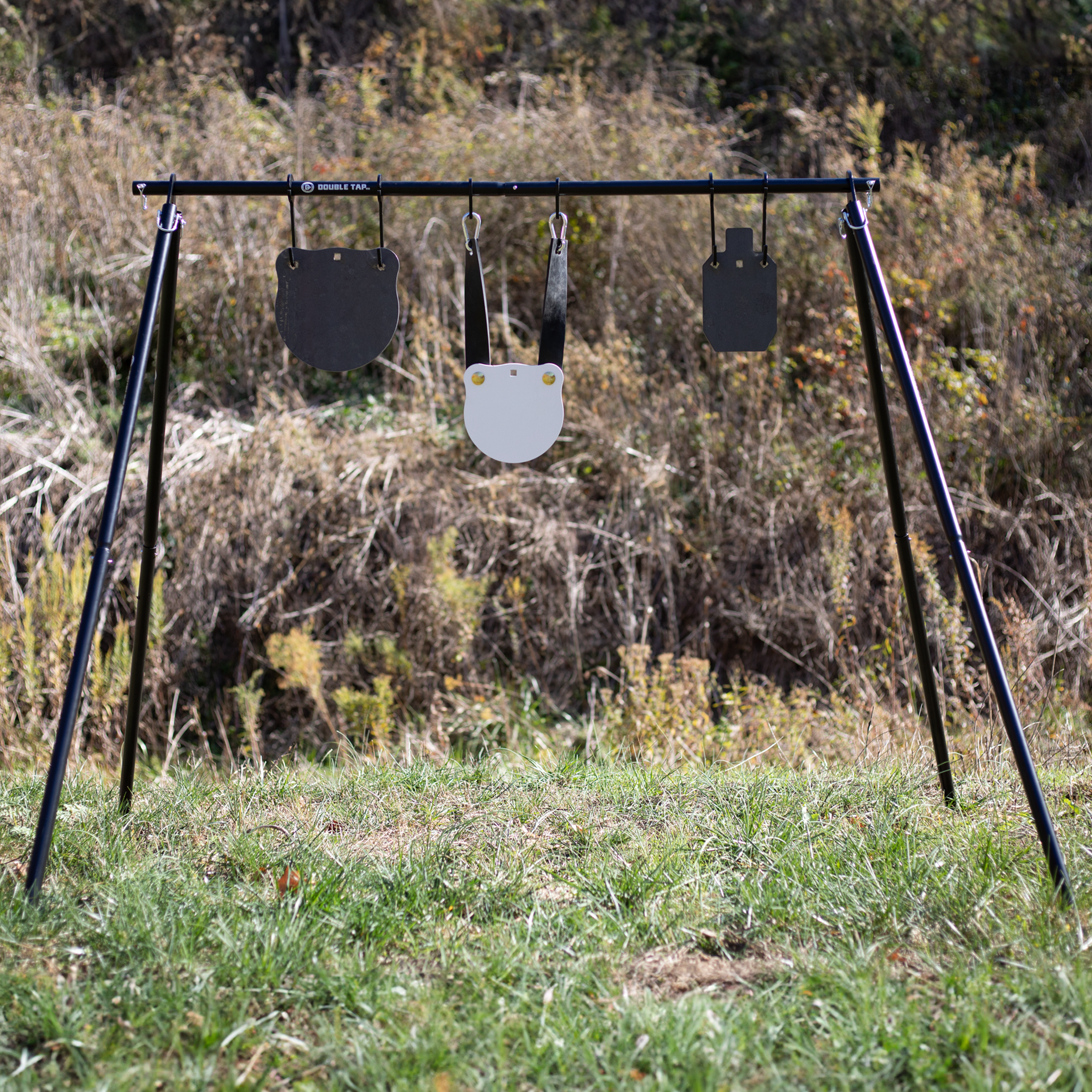
Steel targets provide instant feedback that paper targets cannot match. When a bullet strikes hardened steel, the audible “ping” immediately confirms a hit without needing to walk downrange or check optics.
This immediate feedback makes steel targets a popular choice, but understanding steel target safety guidelines is essential for a successful range day.
Distance works as your primary safety buffer. At proper ranges, bullets fragment into small, low-energy particles that fall harmlessly to the ground. Too close, and those same fragments retain enough velocity to cause injury. Steel target thickness recommendations complement distance protocols; thicker steel handles higher-energy impacts, but even AR500, AR550 or SR500 steel requires respect for minimum engagement distances.
Understanding these relationships between caliber, velocity, steel hardness, and safe distance creates the foundation for effective steel target practice and bullet fragmentation safety.
Types of Steel: AR500 vs. AR550
Not all steel targets are created equal. The most common grades used in shooting targets are AR500, AR550, and SR500, with the numbers referring to their Brinell Hardness Rating (BHN)—a key indicator of durability and resistance to deformation.
AR500 steel (approximately 500 BHN) is the industry standard for most shooting applications. It performs well with all common pistol calibers and many standard rifle rounds when used at proper distances. For the majority of shooters, AR500 provides a reliable balance of cost, durability, and performance for everyday training.
AR550 steel (around 550 BHN) offers increased hardness, making it more resistant to cratering and wear from repeated impacts. This makes it a strong choice for high-velocity rifle rounds, magnum calibers, or high-volume shooting environments where target longevity is critical.
SR500 steel is engineered specifically for steel target applications, with a focus on consistency and impact resistance. While similar in hardness to AR500, SR500 is produced to tighter quality standards, resulting in more uniform performance across the entire plate. This leads to more predictable wear patterns and safer fragmentation when targets are used correctly.
It’s also important to note that in many real-world applications, plate thickness can be just as important as hardness. Instead of moving up to AR550, shooters can often achieve similar durability by choosing a thicker AR500 or SR500 target, especially for rifle use. Increasing thickness helps absorb impact energy and can significantly extend target life when shooting higher-velocity calibers.
In summary:
-
AR500 is the go-to standard for pistol shooting and moderate rifle use
-
AR550 provides added hardness for extreme velocity and high-volume shooting
-
SR500 offers consistency and purpose-built reliability for target applications
-
Thicker plates (AR500 or SR500) can often substitute for AR550 depending on use case
Choosing the right steel depends on your caliber, shooting distance, and volume—but selecting the proper hardness and thickness combination is essential for both target longevity and shooter safety
Why Distance Matters: Understanding Minimum Distance for Steel Targets
-
Pistol vs rifle shooting distance requirements begin with recognizing the fundamental differences in projectile energy. Rifle rounds carry significantly more kinetic energy than pistol rounds, creating more violent fragmentation upon impact. A .308 Winchester rifle round generates approximately 2,700 foot-pounds of energy, while a 9mm pistol delivers roughly 350 foot-pounds. This energy difference directly correlates to fragment velocity and travel distance.
-
Distance serves as your primary protective factor by allowing fragments to decelerate and drop to the ground before reaching the shooter. Bullet fragments lose energy rapidly as they travel, which is why distance is the most important safety factor.
Minimum Safe Shooting Distances by Caliber
The minimum safe distance for shooting steel targets varies significantly based on the caliber and velocity of ammunition used. These distances aren't suggestions, they're calculated safety thresholds based on fragmentation patterns and ricochet behavior.
The minimum safe distance for shooting steel targets is typically 10 yards for handgun calibers and 100 yards for most rifle calibers, depending on bullet velocity and steel target thickness.
Pistol Caliber Distance Requirements
For AR500 steel targets, pistol calibers generally require shorter minimum distances than rifles. Standard handgun rounds (.22 LR, 9mm, .40 S&W, .45 ACP) can safely engage targets at 10 yards minimum. However, higher-velocity pistol calibers like .357 Magnum and 10mm require 15 yards due to increased impact energy and fragmentation potential.
The question of "how close can you shoot steel targets" depends critically on your ammunition. Magnum revolver cartridges (.44 Magnum, .454 Casull) push this distance to 25 yards because they approach rifle velocities and generate significantly more fragmentation.
Rifle Caliber Safety Distances
Rifle rounds demand substantially greater standoff distances. Standard rifle calibers (.223/5.56, .308/7.62) require a minimum of 100 yards for AR500 targets. This dramatic increase reflects the physics at work: rifle bullets travel three times faster than pistol rounds and fragment more violently upon impact.
Magnum rifle calibers (.300 Win Mag, .338 Lapua) extend the minimum distance to 200+ yards. These rounds generate enough force that even AR550 steel requires careful placement and proper angling to prevent target damage and dangerous ricochets.
Steel Target Minimum Distance Chart
Ammo Caliber Chart for Steel Targets
Important Information
- Always wear hearing and eye protection when shooting
- Speed must be below 2850FPS (at target) to avoid pitting
- Max Bullet Energy at Target
- 1/4" AR500 - Below 700 ft lbs
- 3/8" AR500 - Below 2,100 ft lbs
- 1/2" AR500 - Below 4,000 ft lbs
- Targets need to be positioned at a 15 degree downward angle
- Do not use steel core or penetrating ammo. Ball or FMJ are suggested. Soft & Hollow Point may cause damage to targets
- Targets are designed for use with lead and copper jacketed lead core bullets only.
- *Do NOT Shoot Steel BB Shotgun Shells at Steel Targets*
| Caliber/Ammo Type | 1/4” AR500 Steel (Rimfire Only) | 3/8” AR500 Steel | 1/2” AR500 Steel | |
|---|---|---|---|---|
| Rifle | ||||
| .22 LR | 10+ Yards | 10+ Yards | 10+ Yards | |
| .17 HMR | 50+ Yards | 15+ Yards | 10+ Yards | |
| .22 Magnum | 25+ Yards | 15+ Yards | 10+ Yards | |
| .357 Magnum | Not Rated | 75+ Yards | 50+ Yards | |
| 223/5.56 Rem | Not Rated | 100+ Yards | 75+ Yards | |
| 7.62x39 | Not Rated | 100+ Yards | 100+ Yards | |
| 6.5 Creedmoor | Not Rated | 100+ Yards | 100+ Yards | |
| 308 Winchester | Not Rated | 100+ Yards | 100+ Yards | |
| 22-250 Rem | Not Rated | 200+ Yards | 150+ Yards | |
| 30-06 | Not Rated | 200+ Yards | 100+ Yards | |
| 243 Winchester | Not Rated | 250+ Yards | 200+ Yards | |
| 7MM | Not Rated | 300+ Yards | 200+ Yards | |
| 270 Winchester | Not Rated | 300+ Yards | 200+ Yards | |
| 300 Winchester Magnum | Not Rated | Not Rated | 200+ Yards | |
| .338 Lapua Magnum | Not Rated | Not Rated | 200+ Yards | |
| Pistol | ||||
| .22 LR | 10+ Yards | 10+ Yards | 10+ Yards | |
| .22 Magnum | 10+ Yards | 10+ Yards | 10+ Yards | |
| .380 ACP | 10+ Yards | 10+ Yards | 10+ Yards | |
| 9MM | 10+ Yards | 10+ Yards | 10+ Yards | |
| .40 S&W | 10+ Yards | 10+ Yards | 10+ Yards | |
| .45 ACP | 10+ Yards | 10+ Yards | 10+ Yards | |
| .44 Special | 10+ Yards | 10+ Yards | 10+ Yards | |
| .357 Magnum | Not Rated | 15+ Yards | 15+ Yards | |
| .44 Magnum | Not Rated | 15+ Yards | 15+ Yards | |
| 10 MM | Not Rated | 25+ Yards | 25+ Yards | |
| 500 S&W | Not Rated | Not Rated | 50+ Yards | |
| Shotgun* | ||||
| 410 Slug | Not Rated | 50+ Yards | 50+ Yards | |
| 20 G Slug | Not Rated | 50+ Yards | 50+ Yards | |
| 12 G Slug | Not Rated | 100+ Yards | 50+ Yards | |
| 410 Buck | Not Rated | 25+ Yards | 25+ Yards | |
| 20 G Buck | Not Rated | 25+ Yards | 25+ Yards | |
| 12 G Buck | Not Rated | 25+ Yards | 25+ Yards |
Ammunition Ratings for Different Steel Targets
Not all ammunition is safe to use with steel targets. The type of ammunition, its velocity, and the hardness of the steel target all play a role in determining whether shooting steel will be safe and effective.
Steel target ratings typically depend on three factors:
• Steel hardness – AR500, SR500 and AR550 steel are commonly used because they resist deformation from high-velocity impacts.
• Target thickness – Thicker steel is required for higher-velocity rifle rounds.
• Bullet construction – Steel core, armor-piercing, or penetrator rounds should never be used on steel targets.
Steel target ammunition ratings refer to the types of ammunition that can safely be used with specific steel hardness and thickness without damaging the target or increasing ricochet risk.
Choosing the correct ammunition for your steel targets helps maintain safe shooting conditions while extending the lifespan of your targets.
Safe Ammo Guidelines for Shooting Steel
Understanding which types of ammunition are appropriate for steel targets is just as important as maintaining the proper shooting distance. Different calibers produce different levels of velocity and impact energy, which directly affects steel target safety.
Safe Ammo Guidelines for Pistol Calibers
Most pistol calibers are safe to shoot at steel targets when used at recommended distances with properly rated steel targets.
Common pistol calibers used with steel targets include:
• 9mm
• .40 S&W
• .45 ACP
• .38 Special
• .22 LR
General pistol shooting guidelines:
• Maintain a minimum distance of 10 yards from the steel target
• Use 3/8" AR500 steel targets for most handgun calibers
• Ensure the target is angled 10-20 degrees downward, to direct bullet fragments toward the ground
• Avoid steel-core or armor-piercing ammunition
• Always wear proper eye protection
When used correctly, pistol calibers produce predictable fragmentation patterns that allow shooters to safely engage steel targets while enjoying immediate audible feedback.
Safe Ammo Guidelines for Rifle Calibers
Rifle cartridges generate significantly higher velocities than handgun rounds, which requires greater distance and sometimes thicker steel targets.
Common rifle calibers used with steel targets include:
• .223 / 5.56 NATO
• .308 Winchester
• 6.5 Creedmoor
• .300 Blackout
General rifle shooting guidelines:
• Maintain a minimum distance of 100 yards for most centerfire rifle calibers
• Use 3/8" or 1/2" AR500 steel targets depending on caliber and velocity
• Avoid steel-core, penetrator, or armor-piercing ammunition
• Ensure targets are mounted securely and angled 10-20 degrees downward
• Inspect targets regularly for pitting or damage
Rifle rounds deliver significantly more energy than pistol rounds, which is why proper target thickness and distance are essential for safe shooting.
Shotguns and Steel Targets
Shotguns can be used safely with steel targets when proper ammunition and distances are followed. Because shotgun shells disperse multiple projectiles, understanding how different loads behave on impact is critical for both shooter safety and target longevity.
General shotgun guidelines for steel targets:
-
Birdshot: Safe to use at 10–15 yards or greater on properly angled steel targets. The small pellets lose energy quickly, making them ideal for close-range training.
-
Buckshot: Should be used at 25–50+ yards, depending on pellet size. Larger pellets retain more energy and can cause damage or unsafe splashback at closer distances.
-
Slugs: Can be used, but only at extended distances of 50–100+ yards, depending on gauge and velocity. Slugs carry significant energy and should only be used on appropriately rated steel targets to prevent pitting or deformation.
Avoid Steel Shot (BBs) on Steel Targets
Do NOT shoot steel BB or steel shot shotgun shells at steel targets.
Steel-on-steel impact significantly increases the risk of ricochet and unpredictable fragmentation, creating a serious safety hazard.
When shooting steel with a shotgun, always use lead-based ammunition, follow minimum distance guidelines, and ensure your targets are properly mounted with a slight forward angle to safely direct projectile splatter toward the ground.
Following these best practices will help maximize target lifespan while maintaining a safe and effective shooting environment.
Setting Up Steel Targets for Safety
Safe steel shooting requires more than just proper distance. The physical positioning and mounting of steel targets directly affects fragment trajectory patterns and ricochet behavior.
Target Angle and Positioning
Steel targets should angle slightly forward (10-20 degrees) or hang freely to deflect fragments downward. Targets positioned perpendicular to the shooter create dangerous back-splatter patterns. Free-hanging targets naturally angle downward upon impact, redirecting fragments into the ground rather than toward the firing line.
Ground Surface Considerations
The surface beneath steel targets matters significantly. Hard surfaces like concrete or frozen ground increase ricochet risk by reflecting fragments upward. It is recommended to position targets over soft ground, sand, or gravel that absorbs fragment energy rather than reflecting it. This simple adjustment reduces splatter patterns by up to 70%.
Clear Shooting Lanes
Maintain unobstructed shooting lanes with no intermediate surfaces. Bullets striking ground, berms, or obstacles before reaching steel create unpredictable fragment patterns. The shooting environment should provide clear sight-lines from firing position to target face, eliminating any deflection opportunities that compromise calculated safety distances.
This systematic approach to target placement creates predictable fragment behavior—essential for addressing common safety misconceptions that persist even among experienced shooters.
TL;DR Steel Target Safety Tips
Regardless of caliber or firearm type, following basic steel target safety practices helps reduce risk and extend the life of your targets.
Steel target safety best practices include:
• Always follow recommended minimum shooting distances
• Never shoot steel core or armor-piercing ammunition at steel targets
• Mount targets so they angle 10-20 degrees downward to direct bullet fragments safely
• Use AR500, SR500 or AR550 hardened steel targets designed for firearm use
• Inspect targets regularly for craters, pitting, or damage
• Always wear eye protection when shooting steel
When used with the correct ammunition, proper distances, and quality steel targets, shooting steel provides one of the safest and most satisfying ways to practice marksmanship.
Common Misconceptions and Safety Considerations
Even experienced shooters misunderstand steel target safety. The most prevalent myth is that "closer is fine if you aim carefully"—a dangerous fallacy that ignores the fundamental physics of bullet fragmentation. Even perfectly aimed shots create fragmentation patterns that can travel unpredictably at close range.
The "Expensive Steel is Always Safer" Fallacy
Many shooters assume that upgrading to AR550 steel eliminates the need for proper distance protocols. However, harder steel grades actually increase fragment velocity because they resist deformation, bouncing bullet pieces back more forcefully. Premium steel extends target lifespan—it doesn't create a safety buffer for shooting too close.
Underestimating Pistol Calibers
Another critical oversight is treating all pistol rounds as equally safe at short distances. While .22 LR can be shot closer than centerfire calibers, magnum pistol rounds like .357 Magnum and .44 Magnum require longer distance protocols. A common pattern is shooters who properly distance their rifle targets but stand 10 yards from steel with a hot-loaded 10mm—velocities exceeding 1,400 fps demand respect regardless of whether the firearm has a stock.
The consequences of these misconceptions range from minor injuries to permanent vision loss, making conservative distance choices the only defensible approach.
Practical Scenarios and Common Patterns
Understanding how distance requirements change across common shooting scenarios helps translate steel target caliber chart specifications into real-world range setup. The distance adjustments required often surprise shooters transitioning between platforms.
Shooters often run into safety issues when switching between firearms. A distance that is safe for handgun practice can be extremely dangerous when used with rifles.
For example:
• A 9mm pistol may safely engage steel at 10 yards
• A .223 rifle requires 100 yards
Indoor ranges can also create unique safety concerns because confined spaces change how fragments disperse. When training with multiple firearms, it is best practice to establish separate firing lines for pistol and rifle shooting.
Key Steel Target Minimum Distance Takeaways
Safe steel target shooting depends on maintaining proper distance, using the correct target materials, and following proven safety practices. These guidelines help reduce ricochet risk and ensure bullet fragments disperse safely.
Core steel target safety principles include:
• Maintain proper shooting distance
-
Pistol calibers: ~ 10 yards minimum
-
Rifle calibers: ~ 100 yards or more
• Match target hardness to firearm type
-
AR500/SR500 steel works well for most handgun shooting
-
AR550 steel is better suited for high-velocity rifle rounds
• Angle targets correctly
-
Targets should tilt 10–20 degrees downward
-
This directs bullet fragments safely toward the ground
• Inspect steel targets regularly
-
Check for pitting, craters, or cracks
-
Damaged targets increase the risk of ricochet
• Use appropriate ammunition
-
Avoid steel-core, armor-piercing, or penetrator rounds
-
Follow manufacturer recommendations for safe calibers
Safe steel target shooting relies on proper distance, quality steel targets, and responsible firearm handling. When in doubt, increase distance and follow manufacturer safety guidelines.