How to Prevent Ricochet When Shooting Steel Targets
Steel targets offer an unparalleled shooting experience, providing instant audible and visual feedback that few other target types can match. However, this rewarding shooting medium comes with inherent risks that demand respect and understanding. The most significant of these is the potential for ricochet; a phenomenon where a bullet or fragment deflects off a surface and travels in an unintended direction, posing a serious range hazard. This guide will provide a comprehensive approach to understanding and preventing ricochet when shooting steel targets, ensuring your time on the shooting range is both productive and safe.
Safety Disclaimer for Shooting Steel Targets
Steel targets should always be used in strict accordance with the guidelines provided by the manufacturer, which include adhering to rated caliber and velocity limits, as well as following established range safety practices. Misuse of steel targets can result in serious injury or damage. It is crucial to confirm that your ammunition is compatible with the target specifications, maintain the recommended safe shooting distances, and conduct regular inspections of the targets before each use to ensure there are no cracks or weakened areas. For further details, consult our Ammo Caliber Chart to verify compatible calibers and ensure safe shooting sessions.
The Hidden Danger: Understanding Ricochet, Spalling, and Bullet Fragments
The three primary projectile hazards when shooting steel: ricochet, bullet fragmentation, and spalling.
When a bullet strikes a steel target, its energy is transferred, and depending on various factors, the bullet can deform, fragment, or deflect. Ricochet occurs when a bullet or fragment bounces off the target at an unpredictable angle. Spalling refers to the chipping or flaking of the target material itself, which can create small, high-velocity fragments of the steel. Bullet fragments, whether they are pieces of the bullet jacket, core, or spall from the target, can travel at dangerous speeds and pose a severe threat to shooters and bystanders. Understanding these distinct yet related phenomena—ricochet, spalling, and bullet splash back—is the first step in mitigating their risks and ensuring a safe experience on the shooting range.
What Causes Ricochet on Steel Targets?
When a bullet impacts hardened steel, three things can happen:
-
The bullet deforms and fragments
-
The fragments deflect downward
-
The projectile deflects unpredictably (ricochet)
Ricochet risk increases when:
-
The target surface is damaged or pitted
-
The steel is too soft
-
The angle is incorrect
-
The distance is too short
-
The ammunition is inappropriate
Proper setup dramatically reduces the chance of hazardous ricochet.
The Gold Standard: AR500 Steel and AR550 Steel
For safe and durable steel target shooting, hardened ballistic steel is essential. The industry standards are AR500 steel and AR550 steel. AR500 steel, named for its nominal 500 Brinell hardness rating, is significantly harder and more durable than mild steel. The superior hardness of an AR500 target ensures that bullets tend to shatter or deform more predictably, minimizing hazardous ricochets and spalling compared to softer materials. AR550 steel offers an even higher hardness rating, providing enhanced longevity and resistance to deformation, making AR550 targets an excellent choice for high-volume shooting or calibers that impart significant energy. When purchasing, if you are questioning the certification of the steel, request a material certificate from the retailer to ensure you are receiving a genuine AR500 target or AR550 target.
In addition to AR500 targets and AR550 targets, newer purpose-built materials such as SR500 steel are emerging within the target shooting industry. Unlike traditional abrasion-resistant steels originally developed for industrial applications, SR500 steel is specifically engineered for ballistic impact performance. Its formulation is optimized to provide consistent hardness, improved resistance to surface deformation, and enhanced longevity under repeated firearm impact. As manufacturers transition toward purpose-designed steels like SR500, shooters may see improved durability and more consistent fragmentation behavior when used within rated caliber and velocity limits. As always, verify manufacturer specifications and ensure the material is properly certified for target applications. Keep an eye on our socials and website for this new type of steel!
Target Thickness and Caliber Compatibility: Matching the Target to Your Firearm
The thickness of a steel target is as critical as its hardness. A target must be thick enough to absorb the energy of the intended ammunition without deforming. Check out our Ammo Caliber Chart for more information. Always follow manufacturer caliber and velocity ratings. Exceeding those limits compromises safety.
Match target thickness to your caliber:
-
Pistol calibers: minimum 1/4" (3/8" preferred for longevity)
-
Standard rifle calibers: 3/8" minimum
-
High-velocity or magnum rifle rounds: 1/2" or greater
Why Mild Steel is Dangerous: Pitting, Dents, and Unpredictable Fragmentation
Mild steel, commonly found in construction or general metal fabrication, is entirely unsuitable for firearm targets. Its low hardness means that even moderate caliber bullets will cause significant damage upon impact. Repeated hits will lead to deep pitting, denting, and eventual warping. This damage creates an unpredictable surface where bullets are highly likely to fragment, spall, and ricochet in dangerous ways. Firing at mild steel is essentially creating a hazard zone, as the bullet debris will be thrown back towards the shooter and the surrounding area with little to no predictability. The use of mild steel for targets significantly increases the risk of bullet fragments and uncontrolled deflection. Always ensure you are using certified AR500 targets, AR550 targets, or even newer steel targets using SR500 steel.
The 10–20 Degree Rule: Mastering the Angle to Prevent Ricochet
Target angle is one of the most important safety factors.
Steel should be angled slightly downward; typically between 10 and 20 degrees.
Why?
When a bullet hits angled steel:
-
It flattens
-
It fragments
-
Fragments deflect downward into the ground
Perfectly vertical steel plates increases the chance that fragments travel straight back along the bullet’s path. Most quality target stands are designed to allow forward tilt. If yours doesn’t account for target angle, adjust your mounting method.

Proper Target Mounting: Allowing for Movement and Deflection
Rigidly mounted steel absorbs impact energy directly and may increase splash back.
Steel targets should and can:
-
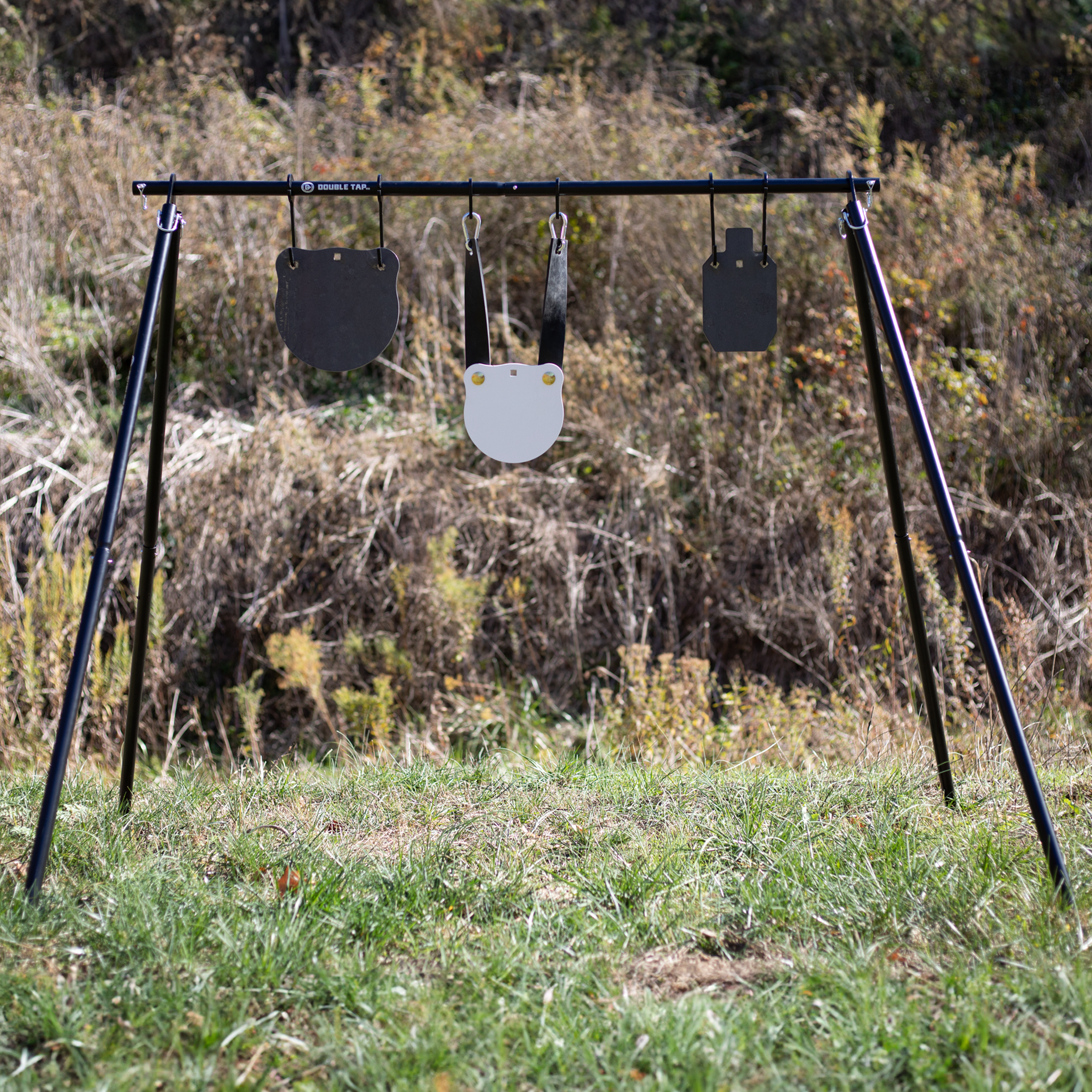
Hang freely from chains, straps, or cables
-
Be mounted to allow slight swing on impact
-
Be mounted using a spring or freely hung on a hanger
Movement helps dissipate energy and encourages downward deflection.
Avoid bolting steel plates tightly to immovable frames unless specifically engineered for that purpose.
Inspect Targets Regularly
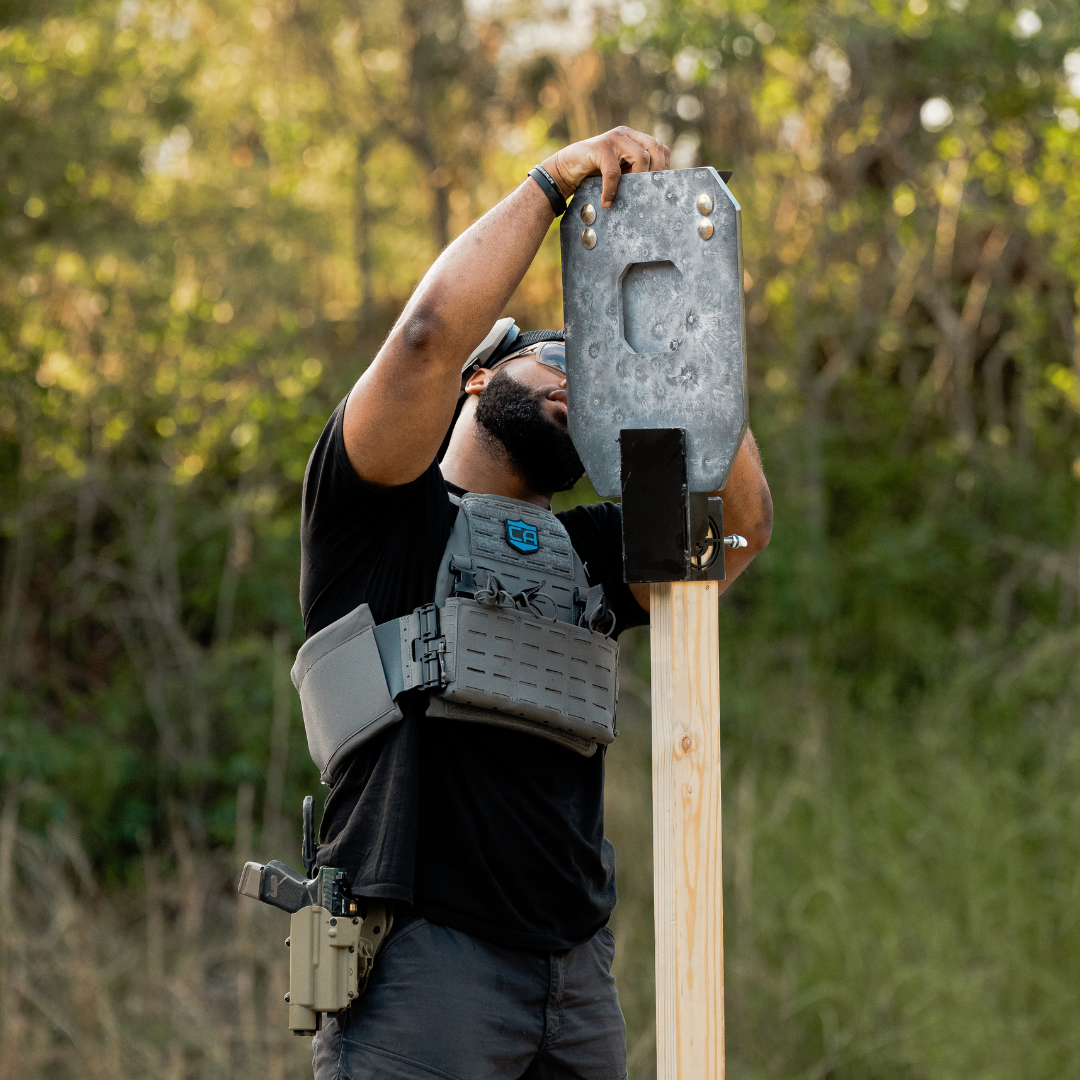
Even with proper use of AR500 targets, AR550 targets, or newer purpose-built materials such as SR500 steel, all steel targets will eventually show signs of wear. Regular inspection is critical for maintaining safety and predictable impact behavior.
Retire targets if you notice:
-
Deep pitting
-
Significant cratering
-
Warping
-
Visible cracks
Damaged surfaces create unpredictable deflection patterns. When the face geometry changes — even slightly — bullet fragmentation becomes less controlled, increasing the risk of splash-back or ricochet.
While newer materials like SR500 are engineered for improved impact performance and durability, no steel target is immune to wear if used outside rated caliber, velocity, or distance guidelines.
When in doubt, replace the steel plates. A compromised target is never worth the risk.
Surface Maintenance: Painting Targets for Visibility (Not Safety)
Painting steel targets is primarily done to enhance visibility. A fresh coat of metal paint makes it easier to spot hits and track targets, improving the shooting experience. However, paint offers no safety benefit in terms of preventing ricochet or spalling. In fact, the buildup of paint on steel plates can eventually contribute to a less predictable impact surface. While painting is good for visibility, it should never be mistaken for a safety feature or a substitute for proper target material, thickness, and condition; especially when dealing with potential bullet fragments or deflection.
When Steel Isn’t the Right Choice
For extremely close-range training or controlled indoor environments, consider the following:
Frangible ammunition
Polymer reactive targets
Paper or reactive splatter targets
Steel is an excellent training tool, but it isn’t appropriate for every scenario.
Check out our H-Base stand for both paper and steel targets.

The Non-Negotiable's of Protective Equipment: Eye Protection and Ear Protection
The most fundamental safety equipment for any shooting activity, especially with steel targets, is robust personal protective equipment (PPE). This includes high-quality ballistic-rated eye protection designed to stop high-velocity fragments. Protective eyewear can prevent 9 out of 10 sports-related eye injuries, according to Prevent Blindness. Equally critical is hearing protection, as a typical gunshot can reach 140 decibels, far exceeding the 85 dB threshold for hearing damage. Always wear both eye and ear protection, without exception, to safeguard against ricochet bullets and the loud noise inherent in shooting sports.
Conclusion: Master the Steel, Master the Safety
The choice of equipment is foundational: selecting hardened ballistic steel like AR500, AR550 or SR500, ensuring appropriate thickness for your intended caliber, and opting for designs that facilitate safe deflection are crucial first steps.
Final Overview to Ensure Safe Shooting with Steel Targets
Preventing ricochet when shooting steel targets comes down to five fundamentals:
-
Use hardened, rated steel such as AR500, AR550, or purpose-built materials like SR500
-
Match target thickness to your caliber and velocity
-
Avoid steel-core and armor-piercing rounds/ammunition
-
Maintain minimum safe shooting distances
-
Angle targets 10–20 degrees downward to direct fragmentation safely
Modern target steels, including newer purpose-engineered options like SR500, are designed to deliver improved durability and consistent impact behavior when used within manufacturer specifications. But no material replaces disciplined setup and proper range practices.
Steel rewards shooters who respect the physics.
When set up correctly, it provides safe, efficient, and highly effective training. When set up incorrectly, it becomes a liability. Follow the standards. Inspect your equipment. Use rated materials. Do that, and steel becomes one of the best training tools in your arsenal.